Walworth, Milwaukee Counties Have No Known Nests
(WPR)---Wisconsin’s bald eagle population has been steadily growing since the 1970s.
But until recently, the state still had three counties without any known bald eagle nests: Kenosha, Walworth and Milwaukee counties.
Then, last year, state ecologists discovered an occupied bald eagle nest in Kenosha County. It was a promising discovery, says Sharon Fandel, a field ecologist for the Wisconsin Department of Natural Resources covering southeast Wisconsin.
The DNR is now turning to the public for help. It’s asking Wisconsinites to report any bald eagle nests they see throughout the state, especially in southeastern Wisconsin.
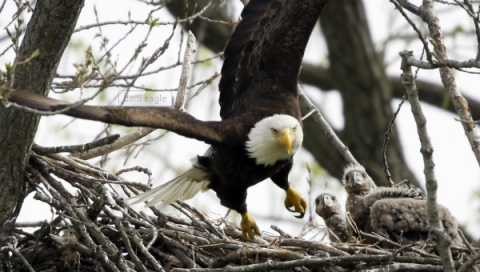
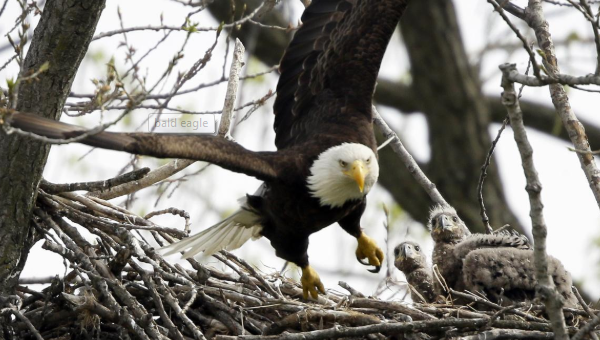
As America’s national bird, the adult bald eagle is fairly easy to identify, Fandel said. They’re large and dark-colored, with white heads and white tails.
However, juvenile bald eagles don’t have white heads or white tails. So you might run into a bit of trouble identifying them.
"Other birds you might get them confused with could be turkey vultures, which we have plenty of in the state," she said. "And occasionally during the winter months you could get them confused with maybe a golden eagle, but that would be more rare."
If you think you’ve spotted a natural bald eagle nest, or seen an eagle incubating eggs or repairing a nest, you can report it to the DNR one of several ways.
The Wisconsin Breeding Bird Atlas, in its fourth year of a five-year effort, is documenting the distribution and abundance of birds throughout Wisconsin. You can enter your own observation data on its website.
The DNR also collects non-game animal reports on its website. The form lets you mark your observation date and time, weather conditions and distinguishing features of the animal.
You can also contact your local DNR bald eagle survey coordinator directly. In southeastern Wisconsin, that’s Fandel.
No matter how you wish to report, make sure you don’t disturb the eagles. You shouldn’t venture so close as to scare it off, according to the DNR.
Fandel says the DNR collects all reports they receive. Many are nests they already have documentation of.
"But even in southeastern Wisconsin where I’ve been covering, we continually year after year get reports of new eagle nest sightings that only add to our data," Fandel said. "And let us know that the population continues to expand."
If it’s a new report, the DNR will likely make a visit to confirm the nest, or rely on local bird surveyors to visit the site.
Though only two Wisconsin counties remain without known bald eagle nests, biologists believe it’s only a matter of time before they move into those regions. That’s exciting to think about, Fandel said.
"I think it marks a certain achievement in some ways," she said. "Or it speaks to the resiliency of these birds and the population and to the efforts that have been put in place to protect these birds."
Wisconsin Public Radio, © Copyright 2018, Board of Regents of the University of Wisconsin System and Wisconsin Educational Communications Board.