Apr. 21, 2020 2:15p
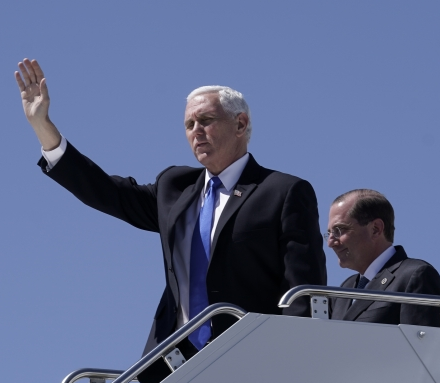
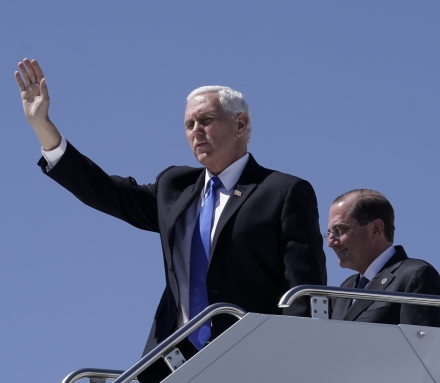
(WPR)---Vice President Mike Pence visited Wisconsin on Tuesday to highlight ramped-up ventilator production in response to the COVID-19 pandemic at a GE Healthcare factory in Madison.
The factory has doubled its ventilator production since the beginning of the outbreak, according to a post on its website. It has also moved to 24-hour operations and recruited volunteers and company retirees to come back to work in support of the increased production, the post said.
GE has also partnered with Ford Motor Company to design and manufacture a simpler version of its standard ventilator, allowing the machine to get to health care providers and patients more quickly.
The vice president’s visit is intended to highlight the private sector’s response to the pandemic. Air Force Two landed in Madison late Tuesday morning and Pence was expected to tour the GE manufacturing facility and participate in a roundtable discussion with company employees in the afternoon.
In the lead up to the vice president's visit, Democratic U.S. Rep. Mark Pocan issued sharp criticism of the Trump administration’s response to the spread of the virus in Wisconsin, where there have been about 4,600 confirmed cases and 242 deaths, according to the state health department.
On a Tuesday morning call with reporters, Pocan said the administration has failed to supply Wisconsin with requested tools to fight the disease, including components of testing kits like chemical reagents and swabs.
"I’m pretty outraged today," Pocan said. "(Pence is) here to tout our preparedness and our production capacities and while it’s great we have a local company stepping up and doing ventilators ... the bottom line is the federal government response has been pathetic."
Gov. Tony Evers sent letters to the Federal Emergency Management Agency (FEMA) on March 26 and March 28 requesting supplies, including about 63,000 N95 masks and hundreds of thousands of tests worth of chemical reagents.
According to numbers released by the Trump administration on Tuesday morning, the state has received 371,000 N95 masks since the outbreak began through public-private partnerships and about 165,000 from the federal stockpile.
However, many health care providers in Wisconsin say they’re still facing day-to-day shortages.
Shari Signer, an inpatient nurse in Madison, spoke with reporters on the Tuesday call organized by Pocan’s office. She and her husband are both nurses.
Signer said she was recently told to keep reusing masks "until there are visible holes or broken straps on them."
"I’m expected to wear the same mask from patient room to patient room, despite their isolation, despite their health care conditions," she said.
At the end of the day, she puts the mask in a brown paper bag to be re-worn the next day.
"It is outrageous that health care workers continue to show up for a battle against a deadly virus without the protection, resources and support that we need to safely do our jobs," she said.
There have been global shortages of reagent chemicals and swabs necessary for testing kits.
The Centers for Disease Control and Prevention (CDC) acknowledged the Trump administration is grappling with those shortages in a message released Tuesday by Pocan’s office.
"We certainly understand the frustration states are experiencing and want to be as supportive as possible during these challenging circumstances," the message read. "However, there are broad, national and global supply chain shortages for many of commercial ancillary reagents required for COVID-19 testing that are impacting the ability of ... all purchasers, international and domestic, to immediately fill orders for these additional items."
The numbers released Tuesday by the Trump administration didn’t include the number of reagents sent to the state. In addition to providing the number of N95 masks sent to the state, it said Wisconsin has received more than 2 million surgical masks, about 130,00 face shields, and roughly 1.5 million surgical gowns.
Editor’s note: This story will be updated.